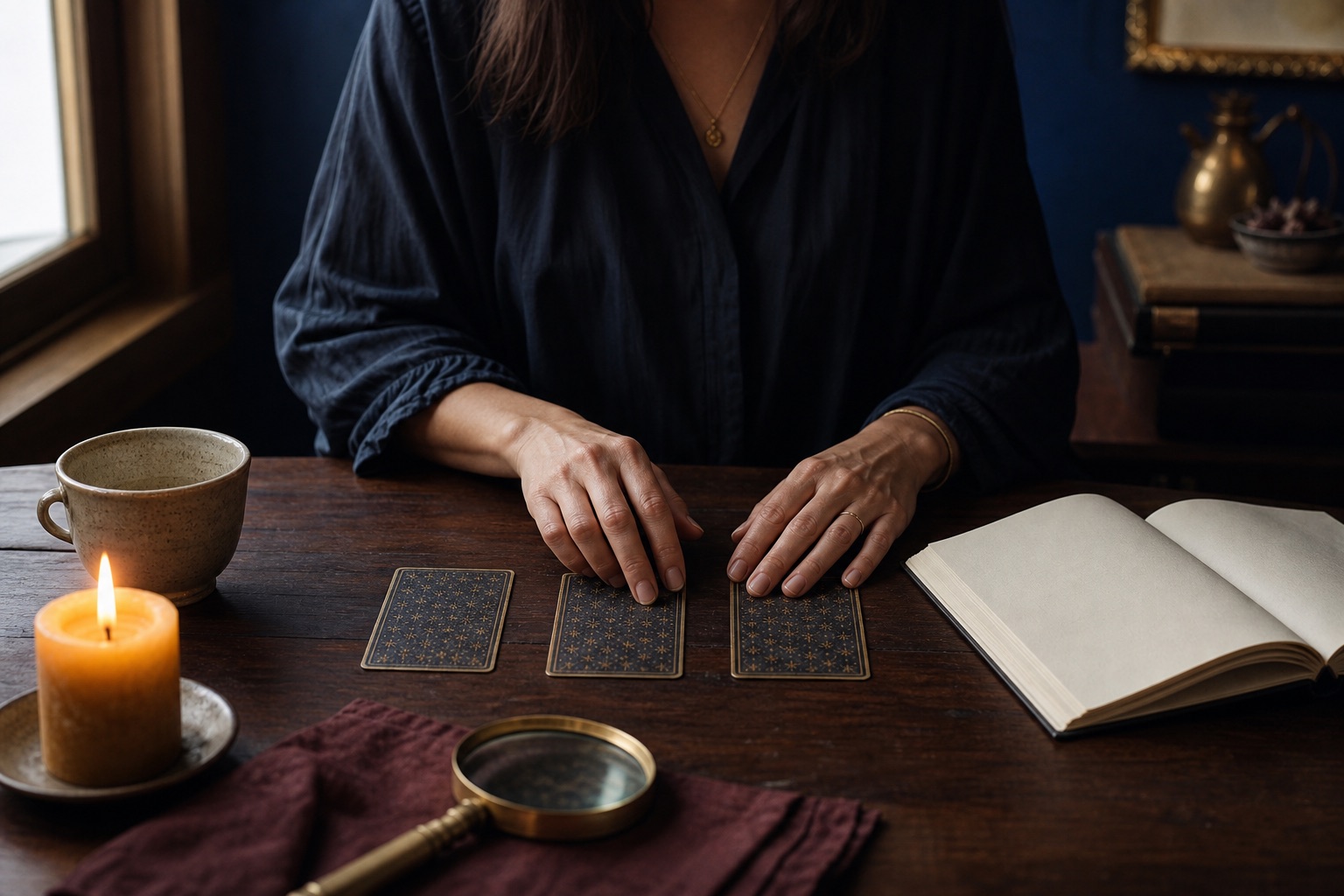
Uncertainty is difficult because it has no shape
When a relationship changes tone, a plan stalls, or a choice has no obviously safe answer, the facts may be incomplete while the emotional response is already intense. The mind keeps circling because it cannot yet tell whether it is reacting to danger, disappointment, hope, or an old memory.
This is often the moment when people reach for tarot, astrology, dreams, stories, or ritual. The attraction is not simply a wish to be told the future. It is also a wish to place an unformed experience somewhere visible.
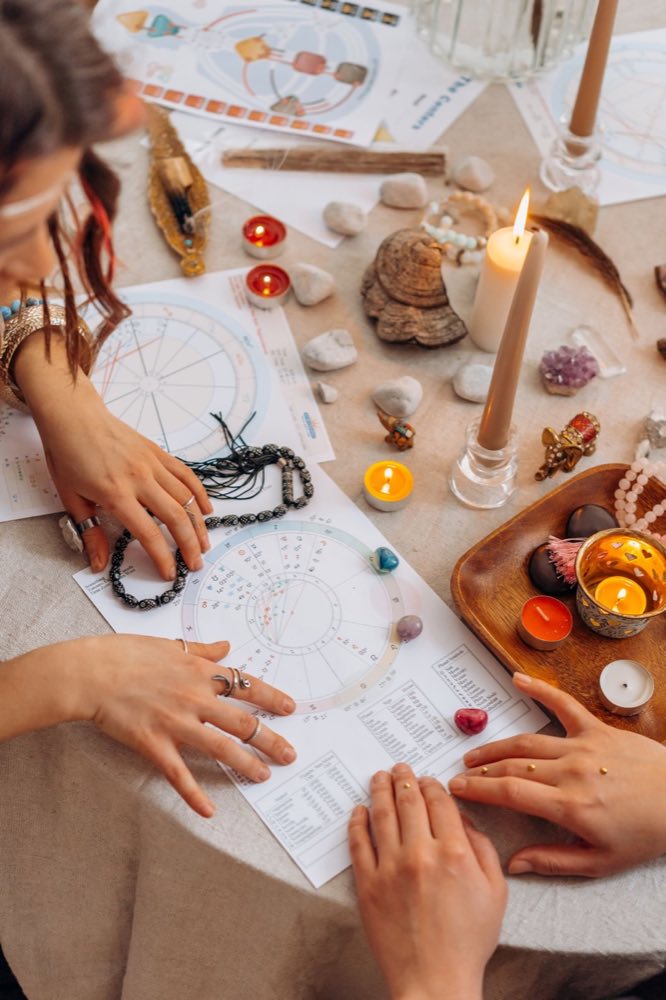
A picture lets several truths sit together
Ordinary advice tends to move quickly toward a verdict: stay or leave, begin or wait, trust or doubt. A symbolic image can hold contradiction for longer. The same card may contain movement and risk, intimacy and hesitation, grief and the beginning of repair.
That complexity is useful because real situations rarely arrive as one clean emotion. Looking at an image slows the rush to conclusion and gives attention to details that would otherwise be edited out.
The card is most useful when it helps you describe the question more honestly—not when it replaces the answer.
Projection is not a flaw; it is information
Two people can look at the same card and notice different things. One sees the open road; another sees the cliff. One notices the figure’s confidence; another notices what has been left behind. These differences reveal what each person is already carrying into the reading.
The useful move is not to pretend projection has disappeared. It is to notice it. Ask why one detail felt urgent, what memory it activated, and whether the interpretation still fits the known facts.
Return from the image to ordinary life
A reading becomes practical when it ends with something that can be observed or done. You might name the conversation you have been avoiding, verify a piece of information, allow another day before deciding, or acknowledge that a boundary has already been crossed.
Symbols open the question. Life tests the interpretation. Used this way, tarot does not demand belief; it asks for attention.